
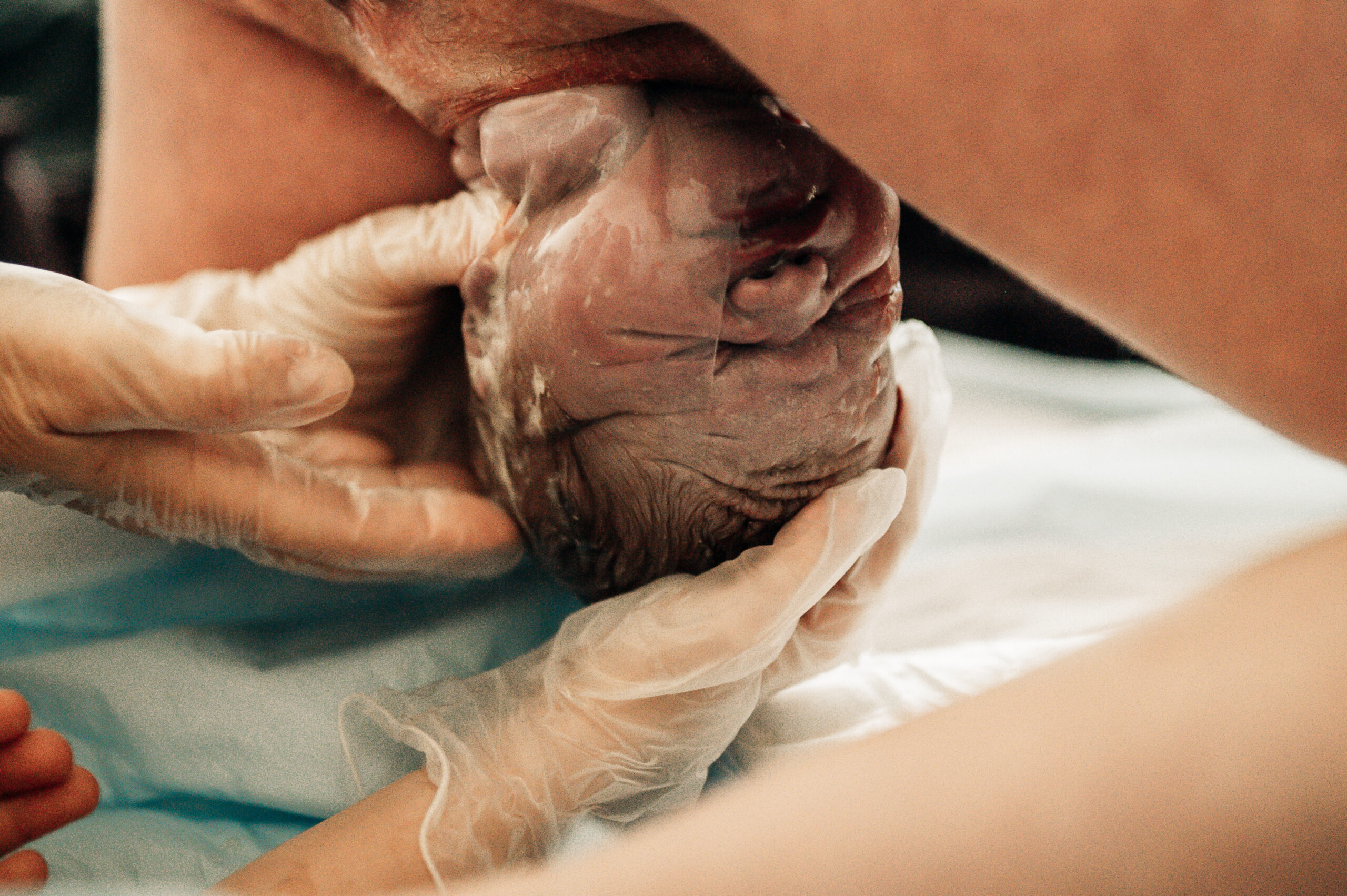
*Less than 1 in 80,000 babies are born this way. I witnessed one at my very first birth session.*

The Moment I First Saw an En Caul Birth
I was sitting on the floor of a bedroom in Fort Worth.
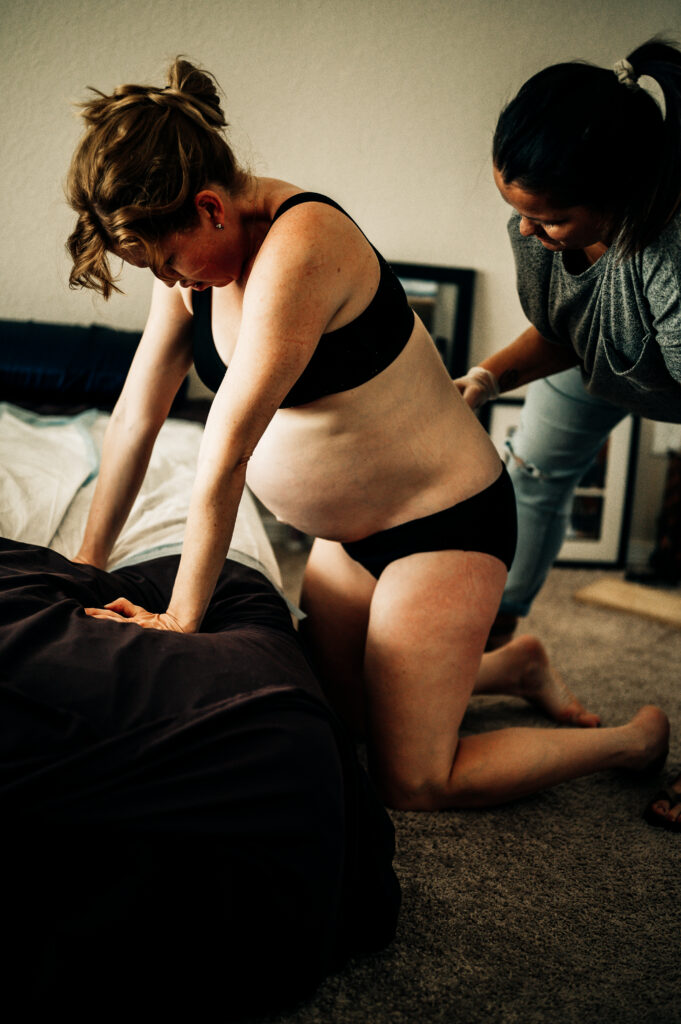
Soft music played under low, warm lights. Paige labored in the tub for a while before her midwife, Susan, guided her to the bed. There, she labored on all fours. Paige’s three-year-old daughter had climbed into my lap at some point during the labor and stayed there, completely unbothered.
I had my camera in my hands. My heart was in my throat.
And then the baby arrived — and he was still inside his sack of waters.
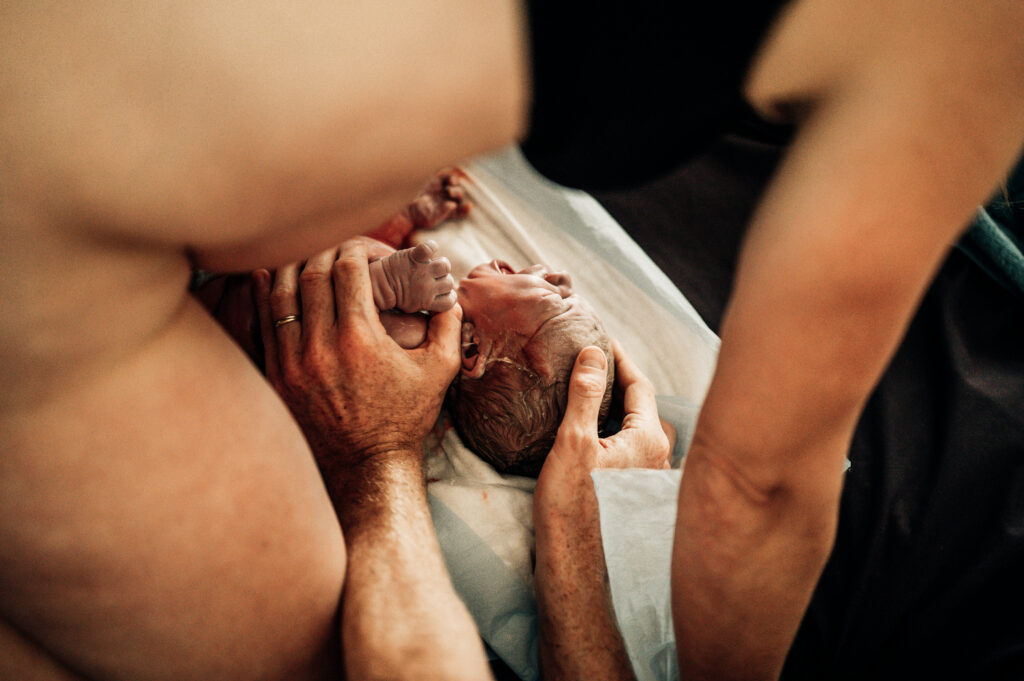
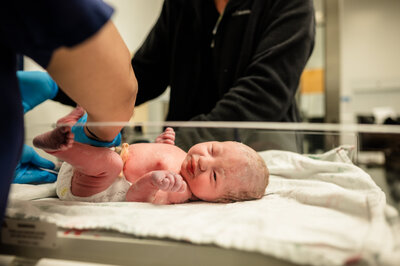
Both little fists tucked up at his cheeks. The membrane intact, glistening, wrapped around him. His face visible through the sac. The sac broke just before he was fully born, and there he was — one of the rarest things that can happen at a birth, happening right in front of me.
This was my very first birth session as a photographer. I had never heard the term **en caul birth** before that day. I did not know what I was seeing. I only knew that I had never witnessed anything like it.
I have thought about that moment almost every day since.

What Is an En Caul Birth?
An **en caul birth** — sometimes called being “born in the caul” — is when a baby is born still partially or fully enclosed inside the amniotic sac.
Normally, the amniotic sac ruptures before or during labor. This is commonly called ‘water breaking.’ In an en caul birth, that membrane stays intact through delivery.
The baby remains perfectly safe even though the sac hasn’t broken. Inside this translucent bubble, the infant appears to be floating. Features are visible through the membrane. The sac may pulsate gently. It is one of the most visually striking things a human being can witness, and photographs of en caul births are some of the most breathtaking birth images in existence.
The care provider typically breaks the sac immediately after delivery so the baby can breathe. In some cases, it may even rupture on its own.
How Rare Is an En Caul Birth?
**En caul births are exceptionally rare.**
Estimates vary, but most sources place the occurrence at somewhere between 1 in 80,000 and 1 in 100,000 births. Some research suggests the rate may be slightly higher in premature deliveries, but for full-term babies it remains one of the rarest events that can happen at a birth.
To put that in perspective: you are statistically more likely to be struck by lightning in your lifetime than to give birth en caul.
I photographed my first birth session in 2001. In all the births I have documented since then, that was the only en caul birth I have ever witnessed.
It was my very first session.

Historical and Cultural Significance of En Caul Births
Throughout history, being born en caul has been considered one of the most auspicious signs a baby could carry into the world.
**In European maritime tradition**, Many cultures believed the caul—the dried amniotic membrane—protected sailors from drowning. For centuries, sailors preserved, sold, and carried these membranes aboard ships.
**In many cultures across the world**, a baby born in the caul was considered destined for greatness, blessed with second sight, or protected from evil throughout their life. Some traditions held that en caul babies would never drown, never be bewitched, and were marked for lives of extraordinary purpose.
**In Victorian England**, cauls were advertised in newspapers and commanded prices equivalent to hundreds of dollars in today’s currency. Midwives, lawyers, and doctors all sought them as protective talismans.
Even today, many families describe feeling a sense of wonder and reverence when an en caul birth occurs — a feeling that something deeply significant has just taken place.
I do not know whether any of the folklore is true. But I do know that standing in that room on that afternoon. Something felt significant. It felt rare and tender—worth every bit of attention I could give it.
What Causes an En Caul Birth?
The honest answer is that medicine does not fully understand why some babies are born en caul and others are not.
Composed of two layers (the amnion and chorion), the amniotic sac usually ruptures during labor. However, in these rare cases, the membrane is simply more resilient
**There are no known risk factors** that make an en caul birth more or less likely. Genetics do not appear to play a role. It is not connected to the mother’s age, health, or number of previous pregnancies. Furthermore, it is not more common with any particular type of birth. It just happens—rarely, unexpectedly, and beautifully.

Is an En Caul Birth Safe?
**Yes — Medical professionals generally consider en caul births safe for both mom and baby.**
The baby continues to receive oxygen through the umbilical cord until the sac is opened and the baby takes their first breath. Experienced midwives and care providers know how to handle the sac quickly and calmly at the moment of delivery.
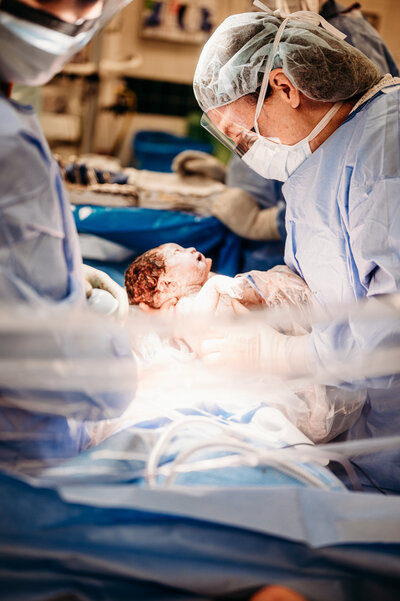
En caul births can happen in hospitals, birth centers, and home births. In fact, they can occur with or without an epidural or medical intervention. Care providers at all three settings are trained to respond appropriately when one occurs.
The most important thing is having a calm, experienced care provider who knows what they are seeing and can respond without alarm — because there is truly nothing alarming about it. It is simply rare.





leave a comment